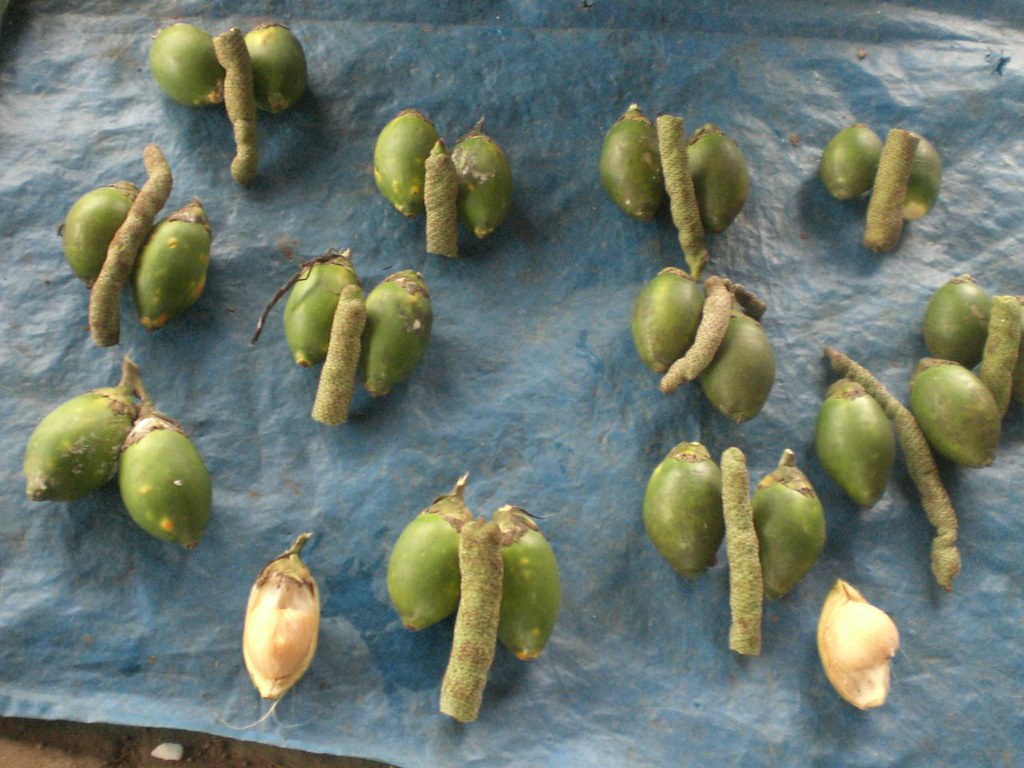
Betel nut, usually identified as Betel nut, stands as the core of the Betel palm tree and carries an crucial part in the tradition and market of many countries across Asia. The areca gets chewed for its energizing impact, notably when blended with betel quid (a combination of betel leaves and lime paste) or chewing tobacco. Indonesia, as it is one of the top growers of betel nut suppliers in Indonesia, has grown into a significant participant in the global trade network for this resource.
Throughout the country of Indonesia, consuming betel nut, known locally as “sirih pinang,” possesses a long tradition. It commonly utilized in customary practices, group assemblies, and medicinal practices. Within countryside, particularly in the island of Sumatra, the island of Kalimantan, and the island of Sulawesi, the custom of chewing Areca seed is still strongly embedded. The nut carries a symbolic and cultural role, typically serving as a symbol of welcoming or incorporated in cultural rites, including weddings.
Economically, betel nut cultivation provides livelihoods for numerous smallholder farmers, primarily in areas like Aceh province, West Sumatran regions, and North Sulawesi. For these communities, betel seed functions as a valuable commercial crop, supplementing their earnings and occupying a key part in regional economies.
The tropical climate of Indonesia’s warm, tropical conditions, rich soils, and long coastal areas provide the best ecosystem for Areca trees to flourish. The growing procedure is simple and needs substantial effort, entailing planting seedlings, upkeep of Areca groves, and collecting the betel nuts after roughly five years. Once harvested, the betel seeds are generally sun-dried, parboiled, or preserved, in line with the region’s tradition and the market demand.
Indonesia’s betel nut sector boasts a wide-ranging production chain, comprising small-scale farmers, area traders, distributors, and exporters. Occasionally, Areca palm seeds are marketed in their fresh state, but usually, they are dried to guarantee a longer storage time and to fulfill the preferences of global customers.
Global market demand for Areca nut, especially in regions including India, Pakistan, the island of Taiwan, and different parts of Southeast Asia, has been rising in the past decade. Areca nut is widely popular in these areas, where chewing it is a cultural tradition, in spite of the growing awareness of its potential health risks. The country of India is the main purchaser of Indonesia’s betel nut. The seeds are prepared in several variations, such as entire nuts, halved nuts, or ground form, based on the regional preferences. The use of betel nut in making paan continues to be prevalent in the Indian subcontinent, and betel from Indonesia is frequently chosen for its premium quality and accessibility.
Taiwan region represents another expanding market for Indonesian betel nuts, where the custom of betel nut consumption is frequently observed, particularly among gents in remote regions. Taiwanese buyers choose Indonesian betel nuts as a result of their lower prices compared to local Areca nut cultivation. Regardless of the profitable opportunities of the Areca nut industry, Indonesian producers struggle with several issues in broadening their markets and improving their distribution networks.
In the last few years, health studies have correlated the consistent consumption of betel nuts with oral malignancies and various health issues, sparkling worries about its potential risks. This has led to some places introducing enhanced regulations or at times cessations on the marketing and chewing of Areca seed products. For instance, the island of Taiwan has established steps to curb betel nut chewing in light of rising oral cancer cases. Indonesian manufacturers, as a result, must deal with the hurdle of navigating these guidelines while upholding their global markets.
Though the Indonesian betel nut industry is extensive, it is missing uniform quality control measures and standardization processes. This may result in disparities in product quality, which affects its global standing. Certain suppliers have commenced integrating more strict classification, evaluating, and packaging standards to ensure uniformity, but the betel nut sector still has opportunities for enhancement.
Similar to many farming products, Areca nut farming creates concerns about forest destruction and ecosystem degradation. In specific regions, Areca plantations have expanded into formerly forested areas, leading to a decrease in biodiversity and interruption of natural systems. Resolving these sustainability challenges is crucial for the sustained success of the business.
Indonesia as a nation is not the sole country growing Areca nut. Additional Southeast Asian nations, such as Thailand, Burma, and Ceylon, likewise have thriving betel nut markets. Suppliers from Indonesia must keep a competitive edge by delivering high-quality products, streamlined supply chains, and advantageous pricing to hold their portion of the international market.
Regardless of the obstacles, the prospects remains promising for the Areca nut industry in Indonesia. The global demand for betel seed is projected to stay robust due to the firmly established customs of customers in major markets. While countries including the country of India and Taiwan keep to seek high-quality betel seeds, suppliers from Indonesia are favorably positioned to fulfill this need.
To ensure continued growth, Indonesian betel nut suppliers are emphasizing innovating their manufacturing processes, refining standards of quality, and investigating additional markets. Some organizations are allocating resources to advanced systems and physical resources to optimize their business activities and improve operational efficiency. Additionally, there is increasing interest in organic and ethically sourced products, which could provide additional possibilities for producers in Indonesia prepared to adopt environmentally friendly methods.
The country of Indonesia’s Areca nut industry is a important contributor to both the local and global market. It provides livelihoods to thousands smallholder farmers and satisfies the needs of overseas markets, particularly in the nation of India and the island of Taiwan. However, challenges such as health concerns, regulatory issues, and market rivalry must be tackled for the industry to succeed in the foreseeable future. By concentrating on sustainability, quality management, and new developments, Indonesian betel nut suppliers can keep to play a vital role in the global logistics.
 Tuan Besar